Audi e-tron GT

Audi e-tron GT is an electric car with a WLTP range of up to 622 km, ready to compare across key specifications before buying.

Model years: 2025 - present

Audi e-tron GT

Audi e-tron GT is an electric car with a WLTP range of up to 622 km, ready to compare across key specifications before buying.

Power
585 hp
WLTP range
622 km
EPA range
500 km
Drive
AWD
Battery type
NMC
0-100 acceleration
4 s

* specifications are for the base version of the vehicle. Other configurations are available in the trims section.

Specifications

Full specifications

Technical data is grouped into tabs for quick switching between range, battery and dimensions.

Motor, range and performance

Range, real-world consumption, motors, power and acceleration figures for the Audi e-tron GT.

GroupSpecificationValue
RangeWLTP range622 km
EPA range500 km
Real-world range, combined mild≈620 km, estimate
Real-world range, combined cold≈455 km, estimate
ConsumptionOfficial consumption≈21.0 kWh/100 km
Real-world consumption, combined mild≈16.9 kWh/100 km
Real-world consumption, combined cold≈23.1 kWh/100 km
MotorsNumber of motors2
FrontPMSM|PMSM
RearPMSM|PMSM
PlatformJ1
PowerPower585 hp
Overboost / Launch ControlYes
Torque625 N·m
Performance0-100 km/h4.0 s
0-60 mph3.9 s
Top speed245 km/h

Video

Video Reviews

Reviews, tests and YouTube videos about Audi e-tron GT.

Audi e-tron GT in detail

Audi e-tron GT is created for those who need an electric car not in the form of a crossover, but in the form of a low four-door Gran Turismo. It combines the J1 platform, two electric motors, quattro all-wheel drive and an 800-volt system. In the current technical version, the model received a 105 kWh battery, of which 97 kWh is available to the driver, and the maximum power of fast charging has increased to 320 kW.

This is an important clarification because early cars had smaller batteries and slower charging. This page collects the characteristics of the updated family: e-tron GT quattro, S e-tron GT, RS e-tron GT and RS e-tron GT performance. All of them are fully electric, without a gasoline engine and without a hybrid component.

Audi e-tron GT — section image

Design and practicality of the Audi e-tron GT

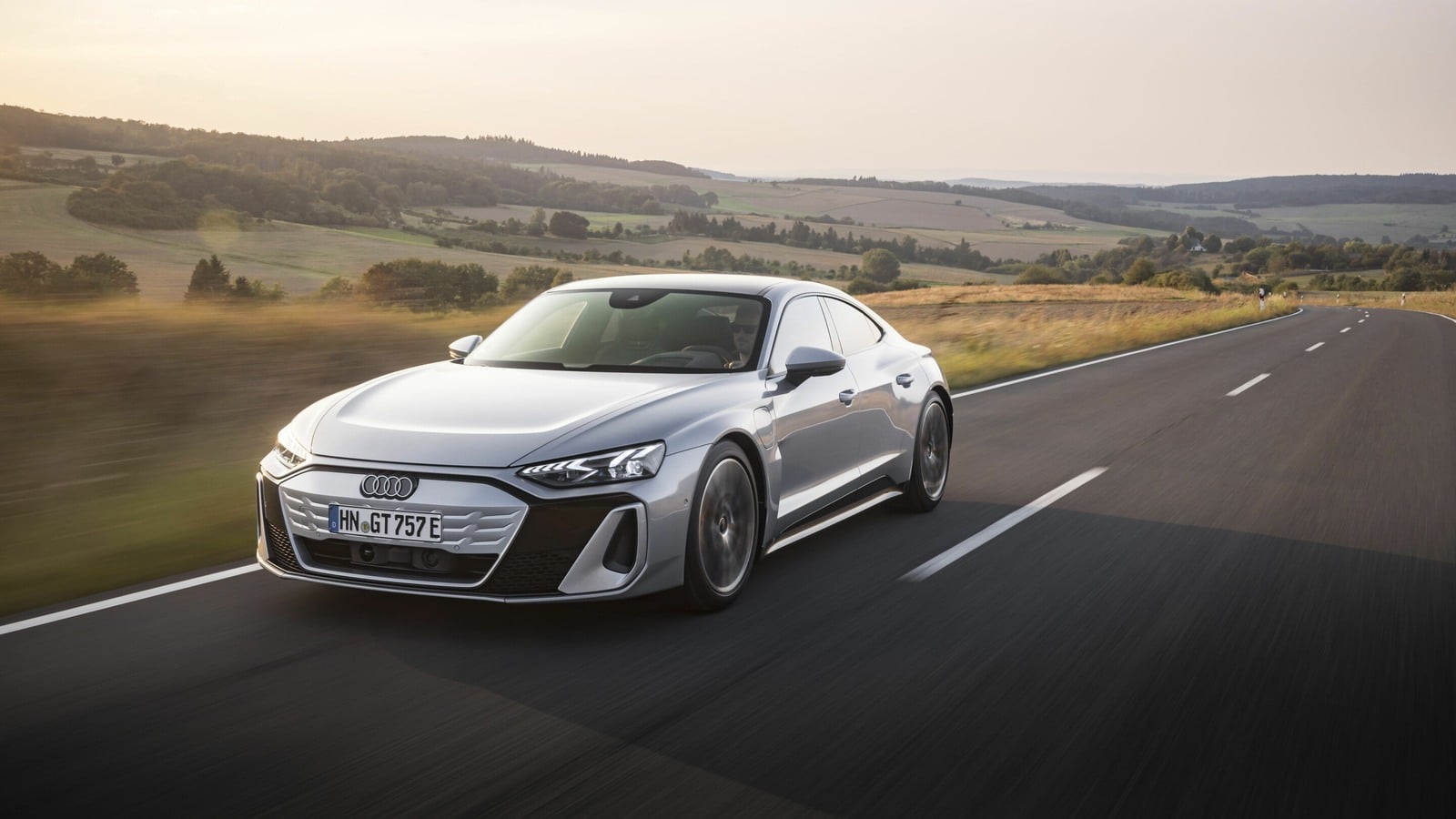
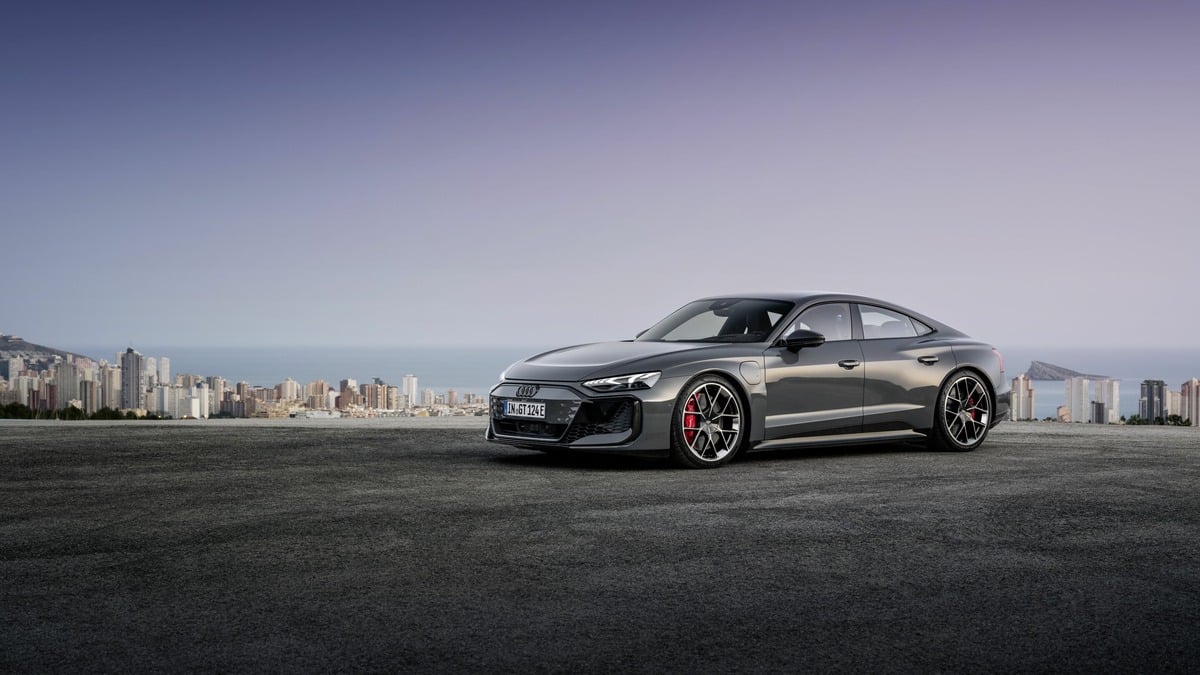
The nearly five-meter-long body looks much more compact thanks to a height of about 1.4 m, a long hood and a smooth roof line. The width of 1964 mm without mirrors gives the car a stable landing, but you have to remember it in a tight parking lot. The wheelbase of 2900 mm leaves enough space between the axles, and short visual overhangs prevent the silhouette from turning into a heavy executive sedan.

The e-tron GT works best in profile. Widened wheel arches, low glazing and an expressive line of shoulders form a sporty image without excessive decor. The front part is almost closed, because there is no large radiator here. Air ducts, a smooth underbody, active flaps and a rear spoiler help reduce drag and stabilize the body at speed.

Practicality corresponds to the format of the Gran Turismo, not the station wagon. In the basic version, the rear trunk has 405 liters, the front has another 77 liters. In the RS, due to other equipment, the rear compartment may be smaller. The back of the second row is divided into parts, so skis or long things can be transported. At the same time, the low roof and narrow trunk opening require more planning than a liftback.

The ground clearance is small, and the base is long. You need to be careful on steep driveways, high curbs and uneven yards. The air suspension makes things easier, but doesn’t make the e-tron GT a car for bad dirt roads. Its natural environment consists of high-quality asphalt, fast highways and long journeys.

Audi e-tron GT — section image

Salon, boarding and equipment

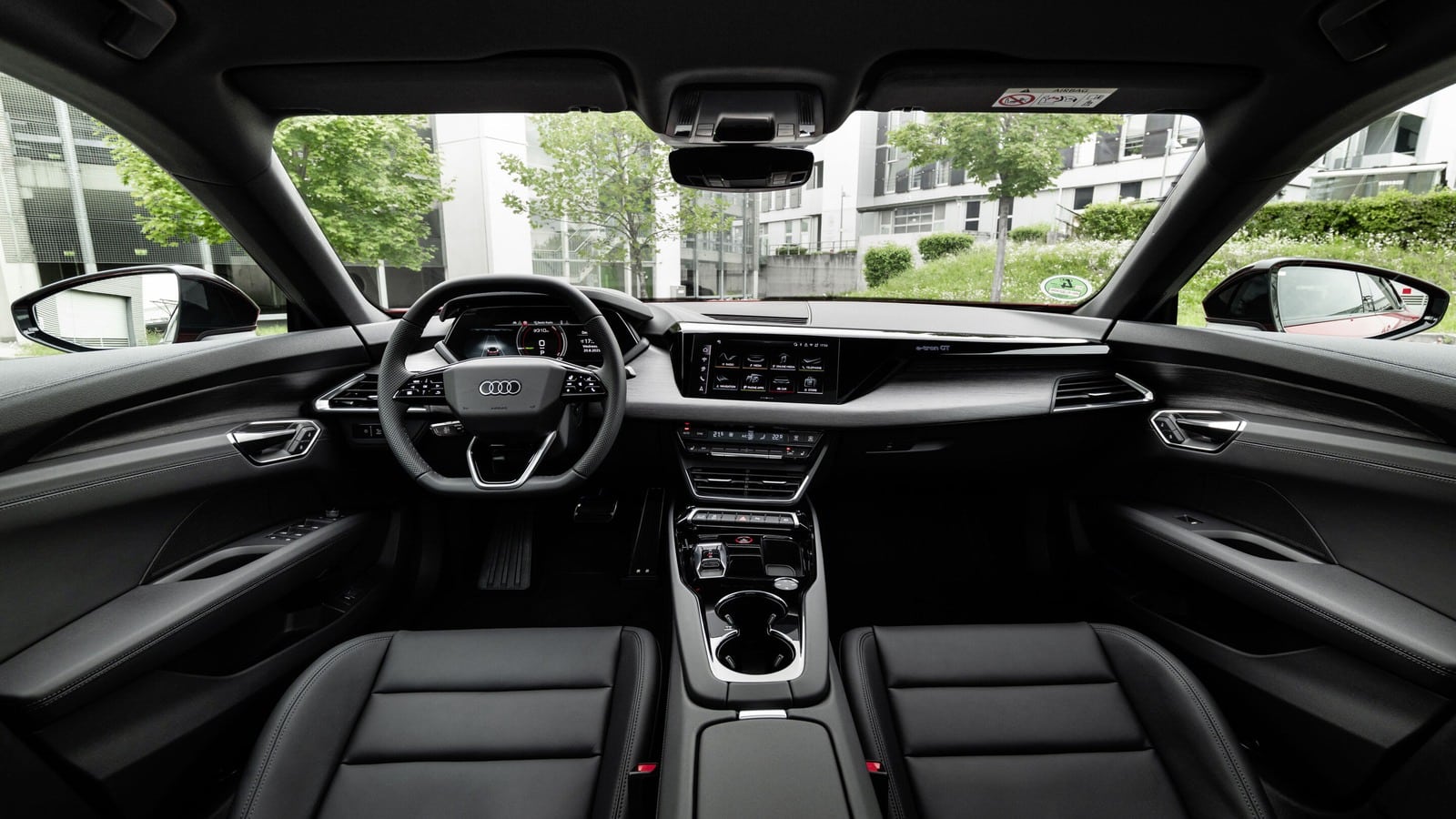
The interior does not try to replace all the controls with a single tablet. In front of the driver is the Audi virtual cockpit plus digital panel, to the right is the central MMI screen, and the climate has a separate block of buttons. This layout looks less futuristic than some competitors, but basic actions are easier to perform on the go.

The front seats are set low and separated by a wide console. More pronounced sports seats are available in the S and RS, while the performance gets special materials and decorative elements. In the second row, there are special recesses in the batteries for the feet of passengers. This keeps the floor from raising the knees too high, although the low roofline still limits headroom for very tall people.

Materials match the price: soft surfaces, neat metal elements, leather or non-leather trim, Dinamica microfiber and Cascade fabric. Some of the textiles are made from recycled raw materials. Optional packages add ventilation, massage, Bang & Olufsen premium acoustics, advanced lighting and a projection display.

The buyer of a used or imported car should check not only the color of the skin. Active subscriptions, navigation region, operation of the myAudi application, matrix light and a set of assistants are important. Complex equipment is an advantage as long as all modules are correctly coded and supported by local service.

Audi e-tron GT — section image

Battery, range and charging

The high-voltage battery consists of 33 modules and 396 packet cells. Its full capacity is 105 kWh, the useful capacity is 97 kWh. The EV Database profile source indicates NMC811 chemistry and 198s2p configuration. Audi officially confirms the lithium-ion cells in the package format, but does not name the supplier, so when repairing or diagnosing it is better to focus on the number of a specific battery.

Up to 622 km WLTP is claimed for the e-tron GT quattro. The S can travel up to 609 km, the RS up to 598 km and the RS performance up to 592 km. These values ​​are obtained in a laboratory cycle and depend on wheels and configuration. In real-world mixed traffic, the EV Database rates the base and S versions at around 620km in mild weather and around 455km in the cold. For the RS, the estimate is around 600 and 440 km, respectively.

There is no official EPA certification for each European version. To keep the page blank, approximate EPA equivalents have been used: 500 km for the quattro, 483 km for the S and 447 km for both RSs. These are not official European indicators, but a conservative orientation according to related American versions and the ratio of EPA to WLTP.

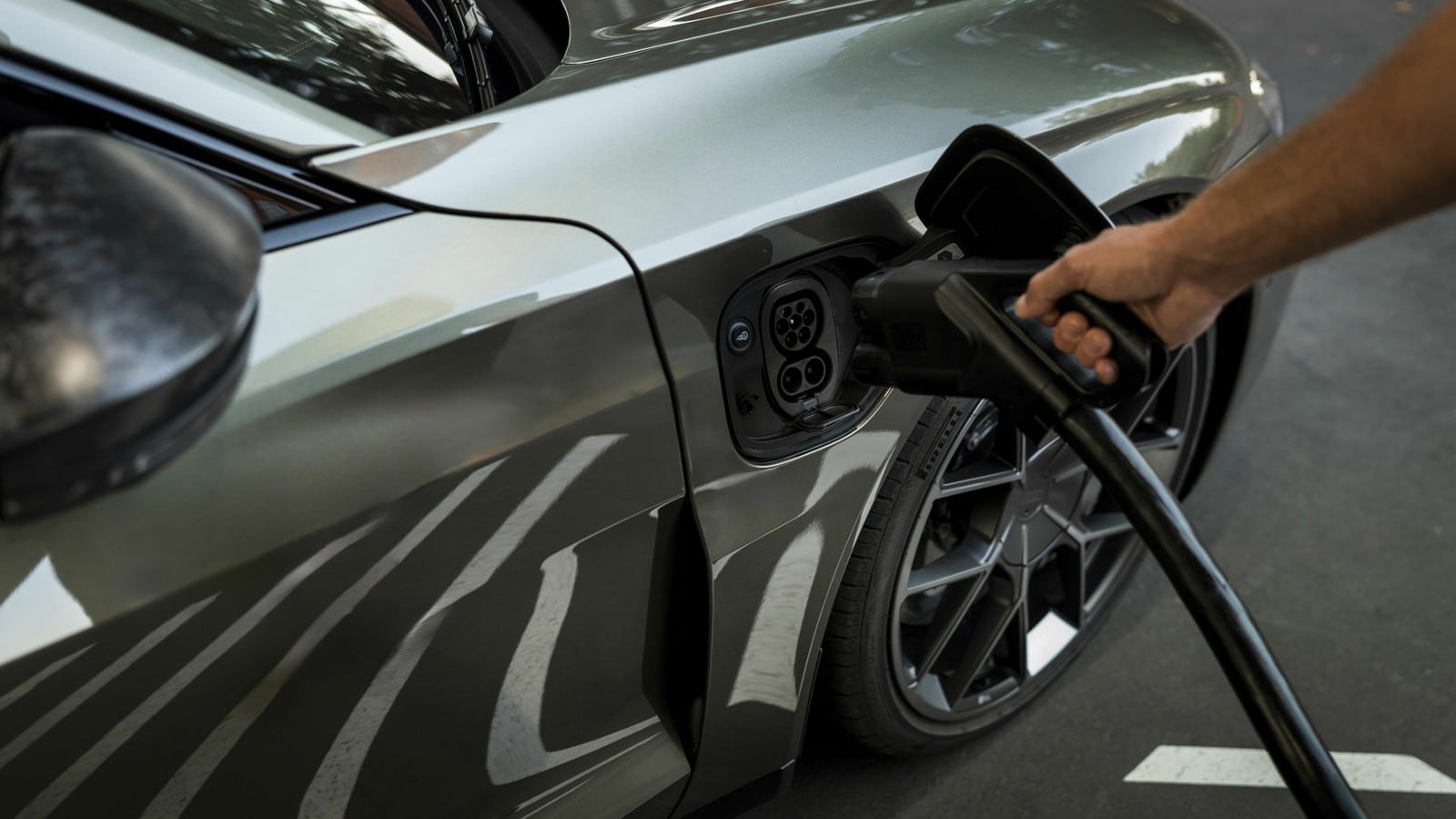
The main technical advantage of the car is manifested in the powerful CCS2 station. Audi claims 10-80% in 18 minutes and a maximum of 320kW. The high voltage allows more power to be delivered with less current, and the battery preparation through navigation helps to reach the desired temperature. On a cold battery or a weaker column, charging will be noticeably slower.

The on-board 11 kW charger is suitable for overnight recharging at home. A full charge of a large battery takes about ten hours. Type 2 and CCS2 connectors do not require exotic adapters. Plug & Charge support allows you to authorize at a compatible station with the car itself, and battery pre-conditioning is especially useful in winter.

Audi e-tron GT — section image

Power, dynamics and road behavior

The base e-tron GT quattro produces 370 kW in normal mode and up to 430 kW during Launch Control. The maximum torque is 625 Nm, and acceleration to 100 km/h takes 4.0 seconds. The S raises the normal output to 435 kW, in the starting mode it has up to 500 kW and 740 Nm. Acceleration is reduced to 3.4 s.

The RS develops up to 630 kW in Launch Control, has around 895 Nm and reaches 100 km/h in 2.8 seconds. The top RS e-tron GT performance briefly delivers 680 kW, or 925 metric horsepower, and 999 Nm. Its result of 2.5 seconds already belongs to the territory of supercars. For daily traffic, even the basic car has a large margin of traction, so the choice of RS should be explained not only by the number of acceleration.

A two-stage gearbox is used on the rear axle. The first gear helps to start sharply, the second reduces the engine speed at high speed. All-wheel drive distributes traction between the axles electronically, and recuperation can reach 400 kW. The brake pedal combines deceleration by motors and conventional mechanisms, although the sensation depends on the selected mode.

The suspension is tuned to hide a mass of more than 2.3 tons, but physics cannot be canceled. The adaptive air suspension controls rolls well and at the same time does not turn the ride into a test. An optional active system can work independently with each wheel and reduce body bite. Large 21-inch wheels look impressive, but 19 or 20 inches are more practical for uneven asphalt.

Advantages of Audi e-tron GT

  • 1. Very fast charging.A maximum of 320 kW and a control time of 18 minutes make long routes realistic.
  • 2. Large useful battery.97 kWh provide a good reserve even on a fast track.
  • 3. Accurate chassis balance.Low center of mass, four-wheel drive and adaptive suspension combine stability with comfort.
  • 4. Quality salon.Familiar controls, good materials and a low landing fit the gran turismo format.
  • 5. Four technical levels.From the fast basic version to the 925-horsepower performance, you can choose the character without changing the body.
  • 6. European charging ports.Type 2 and CCS2 simplify operation without special adapters.

Cons of Audi e-tron GT

  • 1. High price.Even the basic version belongs to the expensive premium segment.
  • 2. A large mass.More than 2.3 tons increase the load on tires, brakes and suspension.
  • 3. Small clearance.The long base and low bumpers require caution in yards.
  • 4. Limited second row.There is enough legroom, but the sloping roof does not like very tall passengers.
  • 5. Expensive options and repairs.Active suspension, large wheels and complex electronics can significantly increase costs.
  • 6. Not all ranges are EPA official.For European versions, you have to use honestly labeled approximate values.
The Audi e-tron GT makes sense for the driver who wants to combine the quietness of an electric car with the ride and response of a sports sedan. The most reasonable is the e-tron GT quattro: it’s already fast, has the largest claimed range and costs less than the S and RS. The S adds tangible dynamism without the hefty price tag, and the RS is worth choosing for chassis tuning, brakes and character, not just shorter acceleration.

In the German price, the official amounts are from 108,900 euros to 160,500 euros. For electrocar.top price fields, a constant editorial rule of 1:1 is applied, so the same numerical values ​​are written in dollars without conversion at the current exchange rate. Before buying a particular car, you need to check the market, options, taxes and the condition of the high voltage system.Audi e-tron GT: battery characteristics, range, charging, quattro, S, RS and performance trims and prices.

electrocar.top

Contact us

If you have any suggestions for improving electrocar.top, email us or message us on Telegram.