BMW i7 G70

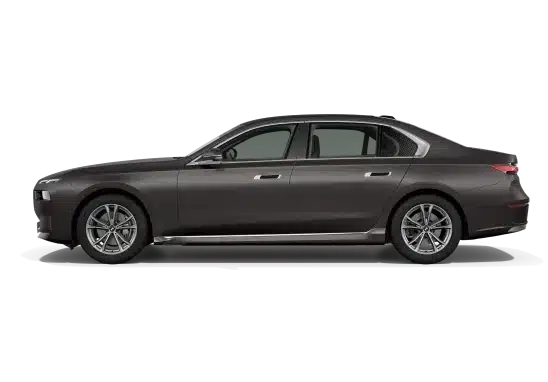
BMW i7 G70 is an electric car with a WLTP range of up to 611 km, ready to compare across key specifications before buying.

Model years: 2022-2026

BMW i7 G70

BMW i7 G70 is an electric car with a WLTP range of up to 611 km, ready to compare across key specifications before buying.

Power
455 hp
WLTP range
611 km
EPA range
505 km
Drive
RWD
Battery type
NMC
0-100 acceleration
5.5 s

* specifications are for the base version of the vehicle. Other configurations are available in the trims section.

Specifications

Full specifications

Technical data is grouped into tabs for quick switching between range, battery and dimensions.

Motor, range and performance

Range, real-world consumption, motors, power and acceleration figures for the BMW i7 G70.

GroupSpecificationValue
RangeWLTP range611 km
EPA range505 km
Real-world range, combined mild≈595 km, estimate
Real-world range, combined cold≈440 km, estimate
ConsumptionOfficial consumption≈20.9 kWh/100 km
Real-world consumption, combined mild≈17.8 kWh/100 km
Real-world consumption, combined cold≈24.0 kWh/100 km
MotorsNumber of motors1
FrontEESM
RearEESM
PlatformBMW CLAR
PowerPower455 hp
Overboost / Launch ControlYes
Torque650 N·m
Performance0-100 km/h5.5 s
0-60 mph5.3 s
Top speed205 km/h

Video

Video Reviews

Reviews, tests and YouTube videos about BMW i7 G70.

BMW i7 G70 in detail

The BMW i7 G70 became the first fully electric 7 Series and the main technological highlight of the seventh generation of BMW’s flagship sedan. The model was unveiled in April 2022, while European deliveries began in November. The pre-facelift period covers cars produced before the transition to the updated series in July 2026.

At launch, buyers were offered the all-wheel-drive i7 xDrive60. In July 2023, it was joined by the more efficient rear-wheel-drive eDrive50, while the second new addition was the sporty M70 xDrive. All versions share the same body, battery, and European CCS2 charging port, but differ in powertrains, performance, and driving range.

BMW i7 G70 — section image

BMW i7 design

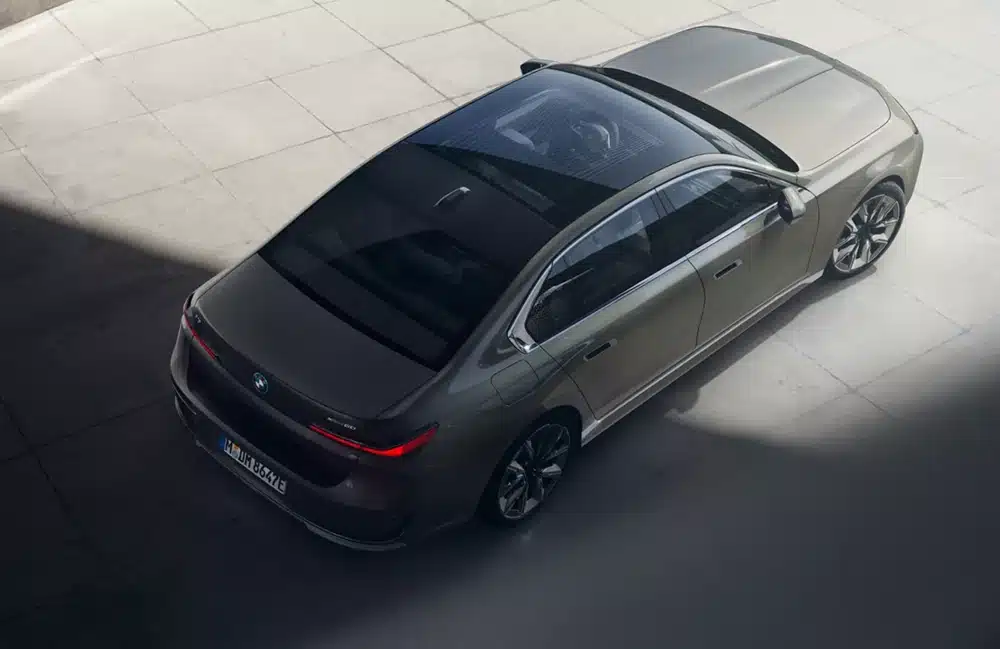
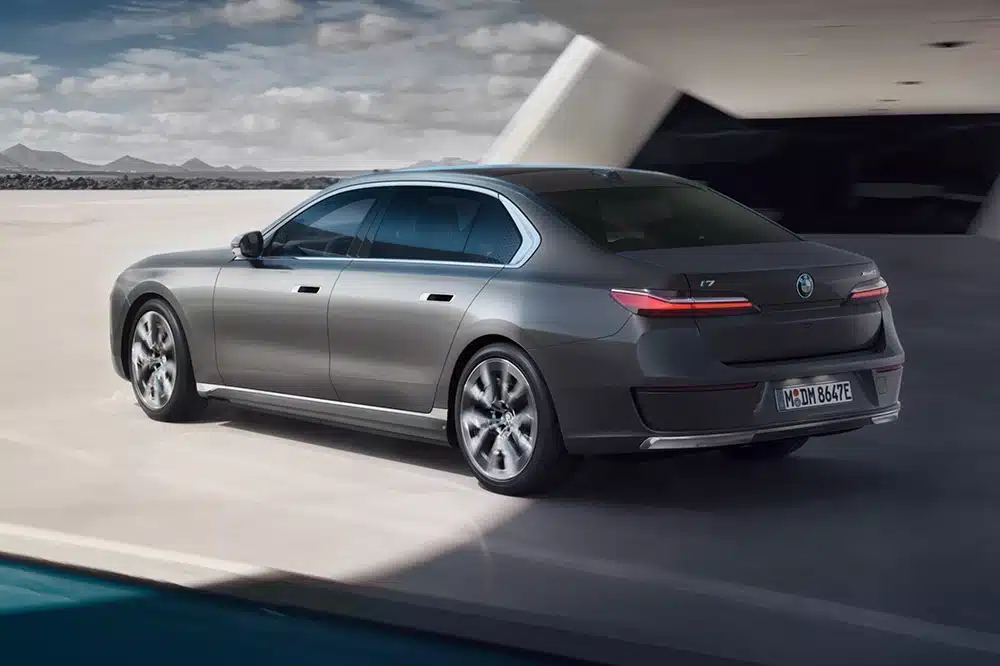
The G70 is produced only with a long wheelbase. The body is 5391 mm long, 1950 mm wide, and has a wheelbase of 3215 mm. In terms of size, the i7 is primarily focused on second-row passenger comfort. In the city, its length of almost 5.4 meters requires a spacious parking space, although the optional Integral Active Steering significantly improves maneuverability by turning the rear wheels.

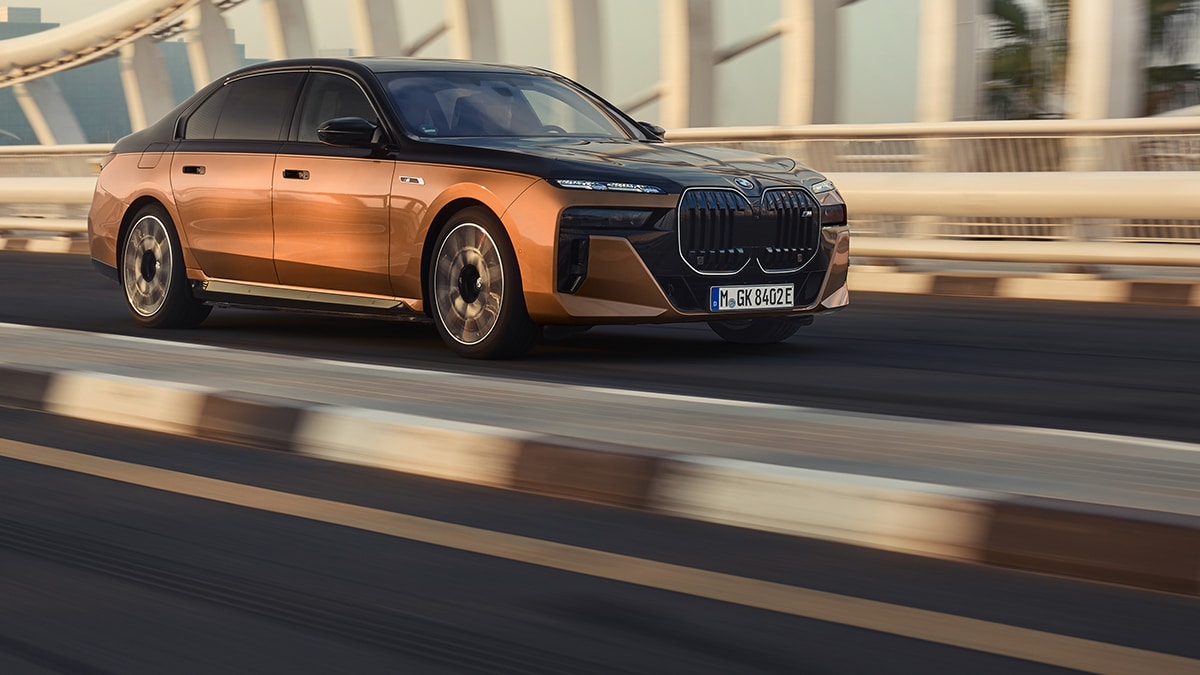
The front end is shaped by split headlights and large BMW kidney grilles with an illuminated BMW Iconic Glow surround. The main daytime running lights are positioned at the top, while the low- and high-beam units are hidden below. The electric version does not try to separate itself completely from the other G70 models. The differences are mostly limited to cosmetic details, badges, aerodynamic elements, wheel designs, and blue accents.

The shared platform with petrol and plug-in hybrid versions allowed BMW to produce different powertrains on the same production line, but it also created packaging limitations. There is no front trunk, so charging cables must be stored in the main 500-liter luggage compartment. The battery under the floor raises the seating position, but the tall body and long wheelbase still leave plenty of room for passengers.

BMW i7 G70 — section image

Interior and technology

In front of the driver is the curved BMW Curved Display, which combines a 12.3-inch instrument cluster with a 14.9-inch central screen. The iDrive controller on the center tunnel complements touchscreen and voice control. Climate functions have mostly been moved to the display, so changing some settings requires opening the relevant menu.

The decorative BMW Interaction Bar runs across the dashboard and doors, combining ambient lighting with touch-sensitive elements. Depending on the specification, the cabin may feature wood, metal, crystal details, leather, or leather-free materials. The equipment of a specific car should be checked by VIN, because visually similar i7 models may have different seats, audio systems, and driver-assistance features.

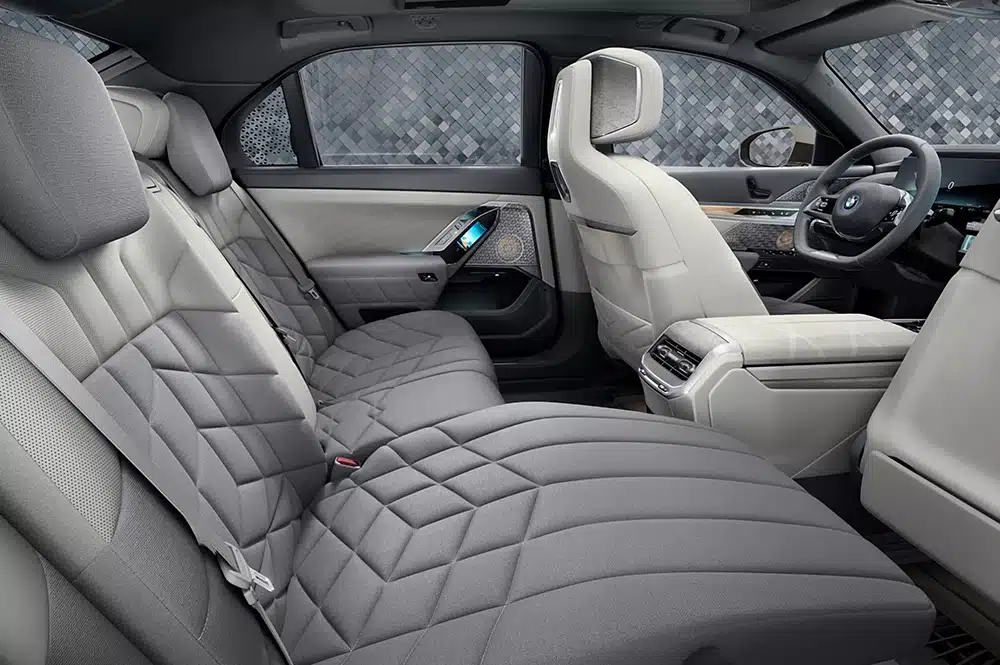
The main feature of the second row is the optional BMW Theatre Screen. The 31.3-inch display with a 32:9 aspect ratio and 8K resolution lowers from the ceiling. When Theatre Mode is activated, the sun blinds close and the lighting and seat positions change. Because of the unusual format, some video content is displayed with borders or cropping, while the availability of streaming services depends on the country and an active subscription.

The Executive Lounge package gives the right rear passenger a greater backrest recline and a footrest. BMW Touch Command panels in the doors control the seats, climate system, blinds, and multimedia. For a car that will mainly be driven by its owner, these options are not essential. For chauffeur-driven use, they largely define the reason for choosing the i7 instead of the smaller i5.

BMW i7 G70 — section image

Battery and driving range

All pre-facelift versions use a lithium-ion battery with a gross capacity of 105.7 kWh. Of this, 101.7 kWh is usable for driving. The large usable energy reserve suits the weight and purpose of the car, but it also increases charging time and the demands on a home electrical connection. For the early xDrive60, BMW claimed 591 to 625 km WLTP depending on wheel size and equipment. The rear-wheel-drive eDrive50 has a range of 575 to 611 km WLTP. The sporty M70 xDrive offers 488 to 560 km. A used car will not automatically reproduce the laboratory maximum, because the result depends on temperature, speed, tires, battery condition, and climate-control use.

Maximum DC charging power is 195 kW. With a preconditioned battery, charging from 10 to 80% takes approximately 34 minutes. The navigation system takes charging stops into account and prepares the battery before arrival at a fast-charging station. The 195 kW peak is not maintained throughout the entire session, so battery temperature and the charging curve are just as important as the official maximum power. The European CCS2 port is compatible with common Type 2 and CCS charging stations in Ukraine. The M70 supports three-phase AC charging at up to 22 kW in the standard European specification. For the eDrive50 and xDrive60, the installed onboard charging module should be checked separately. A 22 kW home charger is useful only if the house or parking facility has sufficient allocated electrical capacity.

In MAX RANGE mode, the car limits speed to 90 km/h, reduces power, and disables some climate functions. BMW estimated that the remaining driving range could increase by approximately 15 or 25%. This mode is intended for emergency situations when the planned charging station is unavailable, not for normal everyday efficiency.

BMW i7 G70 — section image

Performance and handling

The i7 eDrive50 uses a single rear motor producing 455 hp and 650 Nm. Acceleration to 100 km/h takes 5.5 seconds, while the top speed is 205 km/h. This is the simplest powertrain version, but its output is sufficient for a large executive sedan. Rear-wheel drive reduces weight and drivetrain losses, although xDrive delivers traction more confidently on slippery winter roads.

The i7 xDrive60 has two motors, 544 hp, and 745 Nm. The all-wheel-drive system distributes torque between the axles according to grip and driver demand. Acceleration to 100 km/h takes about 4.7 seconds, and the top speed is limited to 240 km/h. This version offers the best combination of range, winter stability, and performance without moving to the firmer M70 setup.

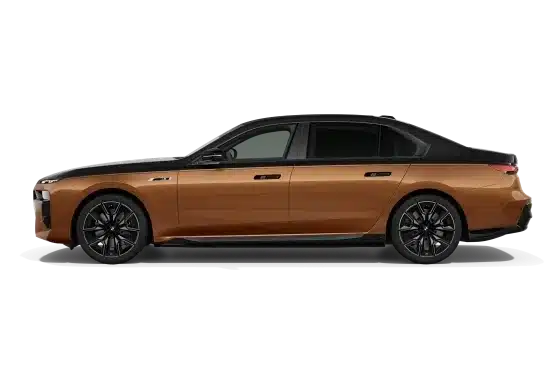
The i7 M70 xDrive produces up to 660 hp and 1015 Nm in Sport mode. M Sport Boost or Launch Control briefly increase torque to 1100 Nm. The sedan accelerates to 100 km/h in 3.7 seconds and reaches 250 km/h. The maximum figures are not constantly available at every state of charge, so they should be understood in connection with the special driving modes.

Depending on the version and equipment, the weight approaches 2.6 or 2.8 tonnes. The two-axle self-leveling air suspension isolates the cabin well from long road undulations and changing loads. Executive Drive Pro adds active roll stabilization, while rear-wheel steering makes the car feel more compact. The electronics control the body convincingly, but cannot completely hide its mass during sudden direction changes or heavy braking.

Pros of the BMW i7

  • 1. Spacious second row. The 3215 mm wheelbase and available Executive Lounge create excellent conditions for long chauffeur-driven journeys.
  • 2. Large usable battery. A capacity of 101.7 kWh provides sufficient energy for a large and heavy sedan.
  • 3. xDrive60 driving range. Up to 625 km WLTP in a favorable configuration allows long-distance routes with a moderate number of charging stops.
  • 4. Two-axle air suspension. It maintains the body height and preserves comfort under different loads.
  • 5. European CCS2 port. The car is compatible with common charging stations in Ukraine without American adapters.
  • 6. Rear-passenger equipment. Theatre Screen, Touch Command, and Executive Lounge turn the second row into a separate relaxation area.
  • 7. Strong performance in every version. Even the base eDrive50 accelerates to 100 km/h in 5.5 seconds.

Cons of the BMW i7 G70

  • 1. Very high weight. A figure of up to 2.8 tonnes increases the load on the tires, brakes, and suspension.
  • 2. Difficult city dimensions. A body almost 5.4 meters long is not suitable for every courtyard or parking garage.
  • 3. No front trunk. Charging cables take up part of the main 500-liter luggage compartment.
  • 4. Charging is limited to 195 kW. Newer rivals with 800-volt systems can restore energy faster at powerful charging stations.
  • 5. Strong dependence on specification. Theatre Screen, Executive Lounge, active chassis systems, and advanced assistance packages are not fitted to every car.
  • 6. Expensive wheels and homologated tires. Large wheels increase costs, reduce comfort, and shorten driving range.

The BMW i7 G70 is suitable for buyers who need a German electric executive sedan with maximum second-row comfort, a quiet cabin, and a powerful drivetrain. Before buying one in Ukraine, it is worth checking the production date, onboard charging module, battery condition, wheel size, chassis packages, and the actual equipment in the rear of the cabin. Without expensive options, a particular car may differ significantly from BMW’s demonstration vehicles. The eDrive50 is a logical choice for calm driving mainly on good roads. The xDrive60 is better suited to Ukrainian winters and offers the most convincing balance of traction, range, and comfort. The M70 xDrive is aimed at buyers who want maximum acceleration and a more sophisticated active chassis. Its advantages come with shorter range, more expensive tires, and even greater weight.

electrocar.top

Contact us

If you have any suggestions for improving electrocar.top, email us or message us on Telegram.