BMW iX3 NA5

BMW iX3 NA5 is an electric car with a WLTP range of up to 637 km, ready to compare across key specifications before buying.

Model years: 2026 - present

BMW iX3 NA5

BMW iX3 NA5 is an electric car with a WLTP range of up to 637 km, ready to compare across key specifications before buying.

Power
320 hp
WLTP range
637 km
EPA range
552 km
Drive
RWD
Battery type
NMC
0-100 acceleration
5.9 s

* specifications are for the base version of the vehicle. Other configurations are available in the trims section.

Specifications

Full specifications

Technical data is grouped into tabs for quick switching between range, battery and dimensions.

Motor, range and performance

Range, real-world consumption, motors, power and acceleration figures for the BMW iX3 NA5.

GroupSpecificationValue
RangeWLTP range637 km
EPA range552 km
Real-world range, combined mild≈575 km, estimate
Real-world range, combined cold≈420 km, estimate
ConsumptionOfficial consumption≈15.9 kWh/100 km
Real-world consumption, combined mild≈15.2 kWh/100 km
Real-world consumption, combined cold≈20.8 kWh/100 km
MotorsNumber of motors1
FrontEESM
RearEESM
PlatformBMW Neue Klasse
PowerPower320 hp
Overboost / Launch ControlNo
Torque500 N·m
Performance0-100 km/h5.9 s
0-60 mph5.7 s
Top speed200 km/h

Video

Video Reviews

Reviews, tests and YouTube videos about BMW iX3 NA5.

BMW iX3 NA5 in detail

The BMW iX3 NA5 became the first production model of the new Neue Klasse family. For BMW, this is a more important car than its name might suggest. This is not simply a replacement for the previous iX3, but an entirely new platform, a different electronic architecture, a fresh design, and the sixth generation of the BMW eDrive electric system.

Production of the crossover was organized at BMW’s plant in Debrecen, Hungary. The all-wheel-drive iX3 50 xDrive was the first version to enter the European market. It was later joined by the more affordable rear-wheel-drive iX3 40 with a smaller battery.

BMW iX3 NA5 — section image

Design of the new iX3

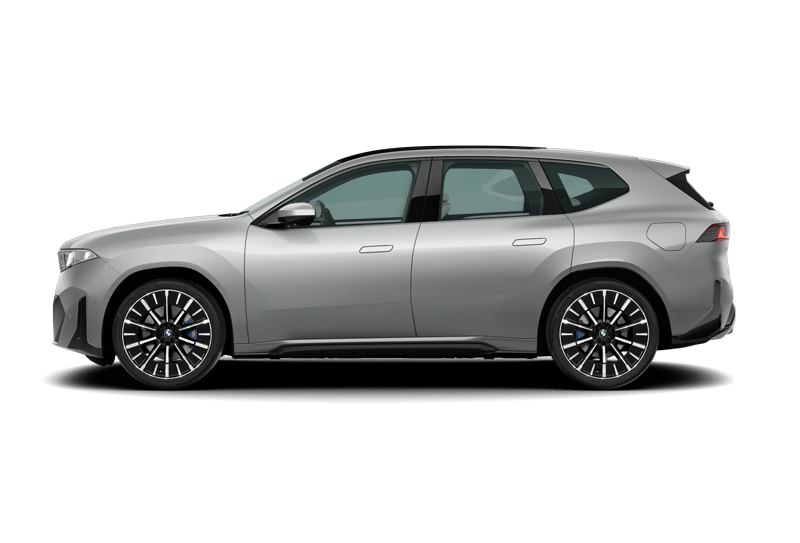
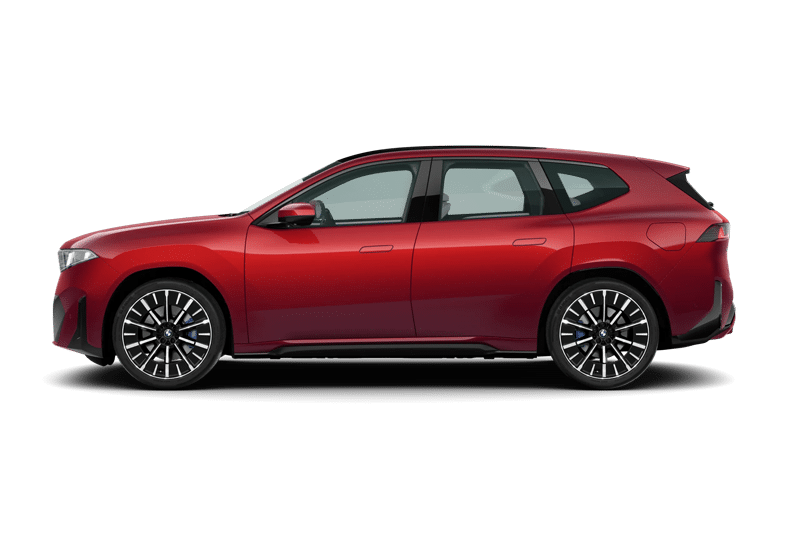
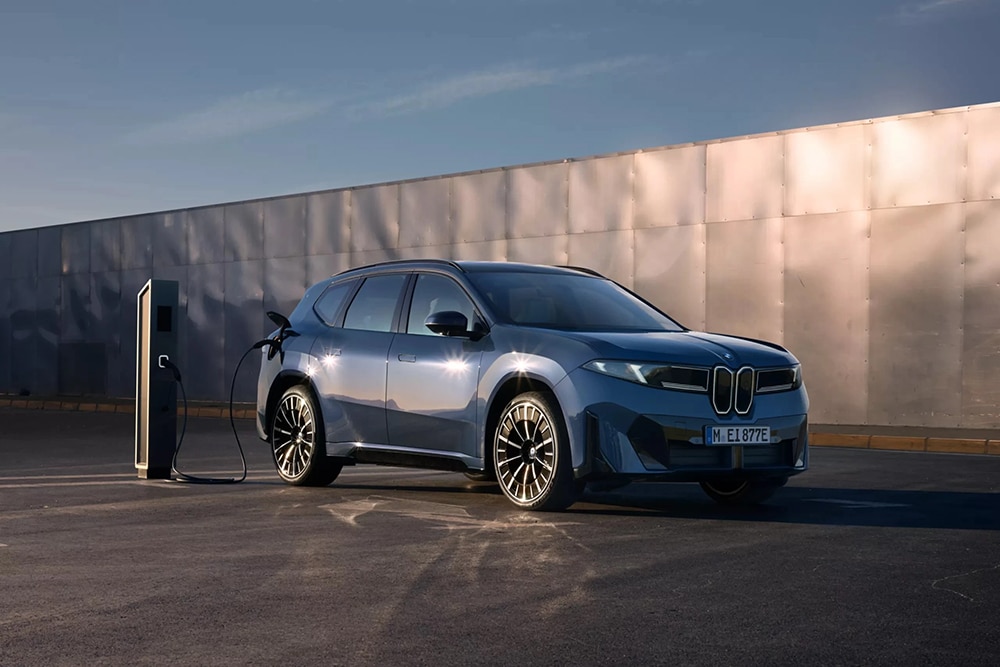
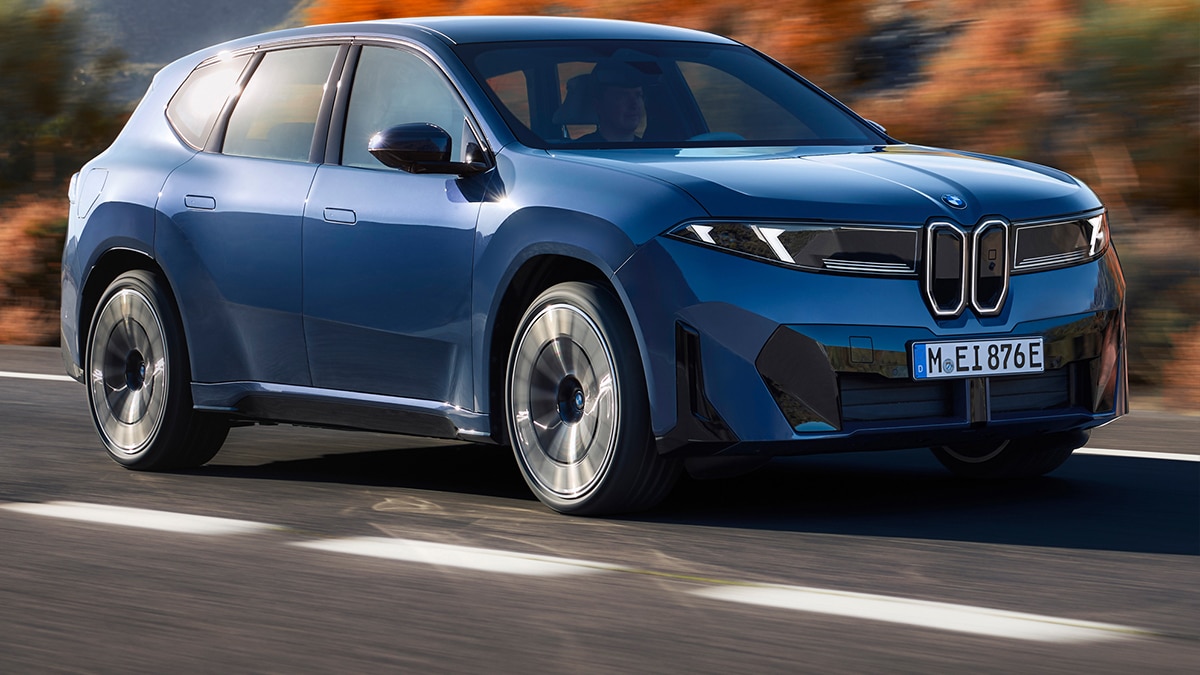
The new iX3 does not try to attract attention with complex lines or an excessive number of decorative details. The body has become cleaner, the surfaces smoother, and the signature kidney grilles have taken on a narrow vertical shape. The main headlights are positioned on either side of them and visually widen the front of the car. At night, the new model is recognizable by its illuminated contour.

In terms of size, the electric X3 remains a typical midsize BMW crossover. It is 4782 mm long, 1895 mm wide, and 1635 mm high. A wheelbase of 2897 mm made it possible to create a spacious interior without turning the car into a bulky BMW iX. Flush door handles, a flat underbody, and a sloping rear window helped achieve a drag coefficient of 0.24.

Practicality is also quite good. The main luggage compartment holds 520 liters, while folding the second-row backrests increases capacity to 1750 liters. There is also a 58-liter compartment under the hood. It is a convenient place to store the charging cable, so it does not have to be taken out from underneath luggage in the trunk. The iX3 50 xDrive can also tow a trailer weighing up to 2000 kg.

BMW iX3 NA5 — section image

New interior features

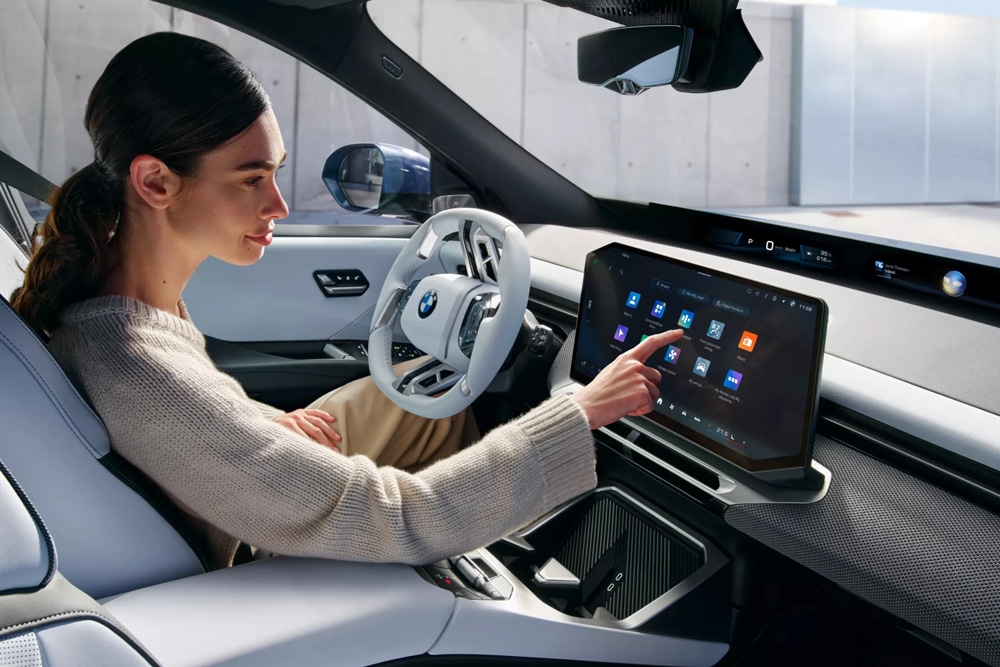
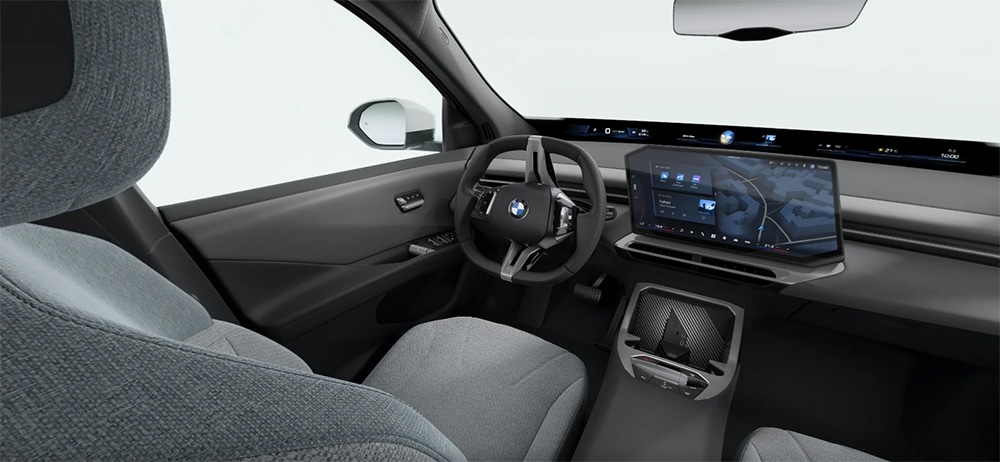
The most noticeable change in the cabin is directly in front of the driver. There is no traditional instrument cluster. Speed, driving range, navigation prompts, and other information are displayed by the BMW Panoramic Vision system on a wide strip near the lower edge of the windshield. Some widgets can be customized and moved closer to the passenger side.

At first, this layout may seem unusual, especially after BMW models with two separate screens. At the same time, the main information is positioned high enough that the driver does not need to keep looking down. A three-dimensional head-up display is available as an option and complements the panoramic display with navigation and driver-assistance information.

The central touchscreen runs BMW Operating System X. The system supports personal profiles, over-the-air updates, a digital key, and route planning with charging stops. Climate and multimedia functions are mostly concentrated in the menus, but BMW has not removed all conventional buttons. Physical controls remain for the turn signals, windshield wipers, mirrors, hazard warning lights, and volume adjustment.

The standard interior is trimmed in Econeer material. More expensive versions offer Veganza, M PerformTex, or Merino leather. M Sport packages add different seats, a sport steering wheel, and dark decorative elements. As a result, the interior can be configured either as calm and bright or in a more traditional sporty BMW style.

BMW iX3 NA5 — section image

Battery

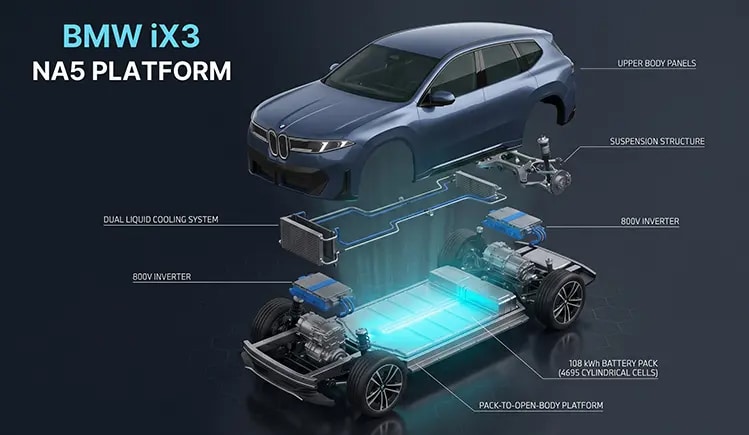
The BMW iX3 50 xDrive received a battery with a usable capacity of 108.7 kWh. Depending on the wheels and specification, the claimed WLTP range is between 678 and 805 km. The upper figure should be understood as the result for the most efficient configuration. In winter, at high speed, or with large wheels, the actual range will be lower.

The 800-volt architecture allows the more powerful version to charge at up to 400 kW. At a compatible station, charging the battery from 10 to 80% takes about 21 minutes. In ten minutes, the car can add enough energy for approximately 372 km of WLTP range. These figures are especially interesting for long-distance routes, although finding a station in Ukraine capable of delivering the full 400 kW will be difficult.

The entry-level iX3 40 is equipped with a battery with a usable capacity of 82.6 kWh. Its range reaches 635 km WLTP, while the maximum charging power is 300 kW. Charging from 10 to 80% takes the same 21 minutes. In ten minutes, up to 300 km of calculated range can be added.

Both versions accept 11 kW AC charging as standard. A 22 kW onboard charger is available at extra cost. This option makes sense when a suitable three-phase connection is available at home, at work, or nearby. Functions for powering external devices and supplying energy to a home network are also provided, but their availability in Ukraine will depend on compatible equipment and regional BMW support.

BMW iX3 NA5 — section image

Performance

The BMW iX3 50 xDrive is equipped with two electric motors. Together they produce 345 kW, or 469 hp, and 645 Nm of torque. All-wheel drive helps deliver this output without excessive wheelspin. The crossover accelerates to 100 km/h in 4.9 seconds and reaches a top speed of 210 km/h.

The rear-wheel-drive iX3 40 has a single motor producing 235 kW, or 320 hp. It develops 500 Nm of torque, accelerates to 100 km/h in 5.9 seconds, and has a top speed limited to 200 km/h. In daily driving, the one-second difference is unlikely to be missed. The entry-level version remains fast, but uses a smaller battery and a simpler powertrain.

The Heart of Joy computing unit plays a separate role in the car’s behavior. It simultaneously controls power delivery, regenerative braking, the conventional brakes, and some chassis functions. This should make pedal responses more precise and the transition from regenerative deceleration to the friction brakes less noticeable. It cannot cancel the laws of physics, however. The iX3 50 xDrive weighs around 2.3 tonnes, so on a narrow road it will not feel as light as a compact BMW sedan.

Pros of the BMW iX3 NA5

  • 1. Impressive driving range. The iX3 50 xDrive can travel up to 805 km WLTP in its most efficient configuration.
  • 2. Fast charging. Support for up to 400 kW reduces a 10-to-80% charging stop to approximately 21 minutes.
  • 3. Convenient luggage compartments. A 58-liter front compartment complements the main 520-liter trunk.
  • 4. Spacious interior. The 2897 mm wheelbase leaves enough room for second-row passengers.
  • 5. Two different powertrain versions. Buyers can choose a more efficient rear-wheel-drive model or a more powerful all-wheel-drive version.
  • 6. Towing capability. The iX3 50 xDrive can tow a trailer weighing up to 2000 kg.

Cons of the BMW iX3 NA5

  • 1. High weight of the more powerful version. Around 2.3 tonnes will affect the car’s inertia and tire wear.
  • 2. Limited benefit from peak charging power in Ukraine. Stations capable of consistently delivering 300 or 400 kW are still rare.
  • 3. Unusual instrument display. Panoramic Vision will require some adaptation after a traditional BMW cabin layout.
  • 4. Many functions are hidden in the screen. Some settings require the touchscreen menus or voice commands.
  • 5. Maximum range depends on the specification. Large wheels, low temperatures, and fast driving noticeably reduce the range.
  • 6. Regional limitations of digital services. Not all online features and bidirectional charging functions will necessarily work in Ukraine.

The BMW iX3 NA5 is aimed at buyers who need a family electric crossover for city use and long-distance travel. It has a spacious trunk, a roomy second row, and enough range to avoid planning a charging stop after every two hours of driving. At the same time, fans of conventional instruments and numerous physical buttons may find the new cabin too digital. The iX3 40 looks like a sensible choice for the city, suburbs, and occasional trips. It has 320 hp, rear-wheel drive, and a WLTP range of up to 635 km. The iX3 50 xDrive is better suited to frequent long-distance journeys, winter use, and towing. The price for that is not only a higher purchase cost, but also greater vehicle weight.

electrocar.top

Contact us

If you have any suggestions for improving electrocar.top, email us or message us on Telegram.