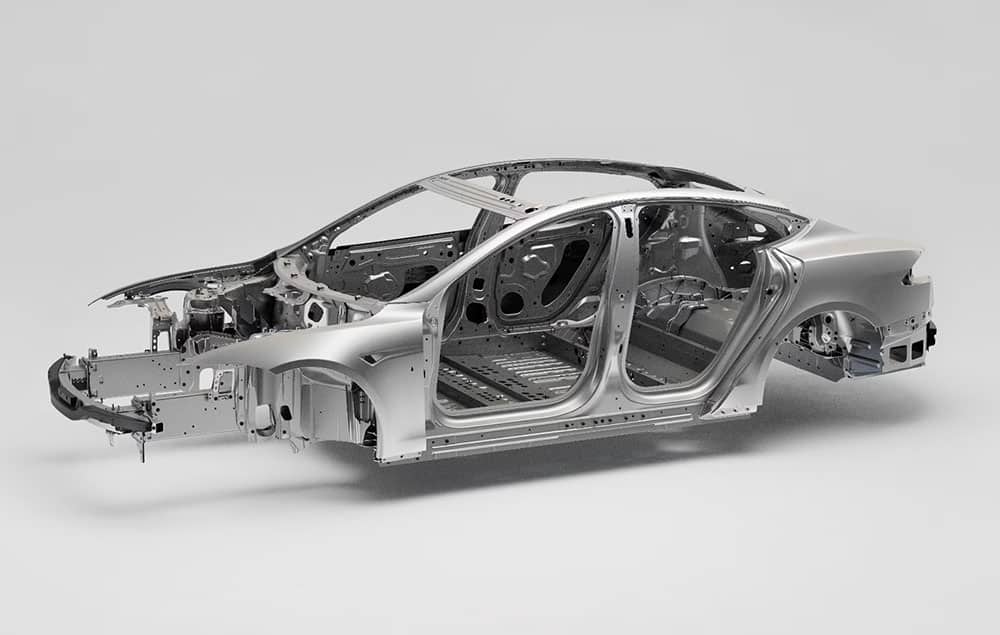
Tesla Model S (Gen. 2)

Tesla Model S (Gen. 2) is an electric car with a WLTP range of up to 744 km, ready to compare across key specifications before buying.

Model years: 2022 - present

Tesla Model S (Gen. 2)

Tesla Model S (Gen. 2) is an electric car with a WLTP range of up to 744 km, ready to compare across key specifications before buying.

Power
685 hp
WLTP range
744 km
EPA range
660 km
Drive
AWD
Battery type
Li-ion
0-100 acceleration
3.2 s

* specifications are for the base version of the vehicle. Other configurations are available in the trims section.

Specifications

Full specifications

Technical data is grouped into tabs for quick switching between range, battery and dimensions.

Motor, range and performance

Range, real-world consumption, motors, power and acceleration figures for the Tesla Model S.

GroupSpecificationValue
RangeWLTP range744 km
EPA range660 km
Real-world range, combined mild≈680 km, estimate
Real-world range, combined cold≈490 km, estimate
ConsumptionOfficial consumption≈15.2 kWh/100 km
Real-world consumption, combined mild≈14.7 kWh/100 km
Real-world consumption, combined cold≈20.4 kWh/100 km
MotorsNumber of motors2
FrontPMSM
RearPMSM
PlatformTesla S/X
PowerPower685 hp
Overboost / Launch ControlNo
Torque800 N·m
Performance0-100 km/h3.2 s
0-60 mph3.1 s
Top speed240 km/h

Video

Video Reviews

Reviews, tests and YouTube videos about Tesla Model S.

Tesla Model S in detail

The Tesla Model S update, codenamed Palladium, became the biggest refinement of Tesla’s flagship liftback since the start of its production. The name Palladium was an internal “technical” project designation, so in official documentation the car appears as the Model S 2021+. On the market, buyers were offered two production versions: the dual-motor Long Range and the tri-motor Plaid.

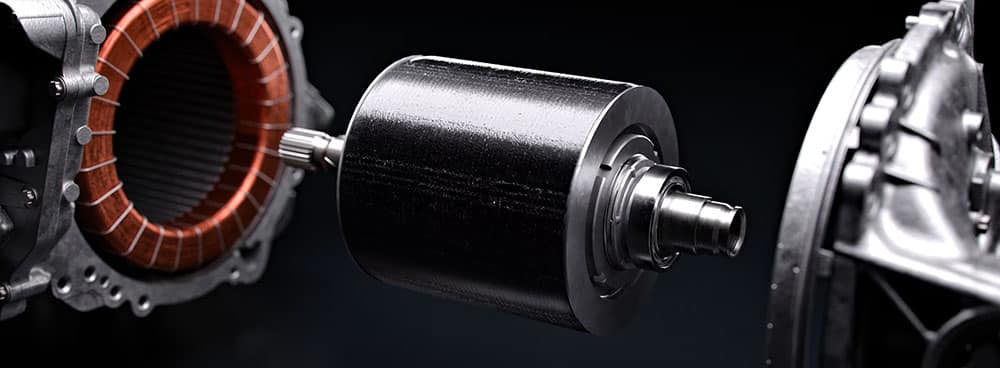
The update was not limited to a new interior. Tesla reworked the powertrain, cooling system, electronics, and chassis settings. Long Range focused on driving range, while Plaid turned the large five-seat liftback into one of the fastest production cars of its time.

Tesla Model S — section image

Design features

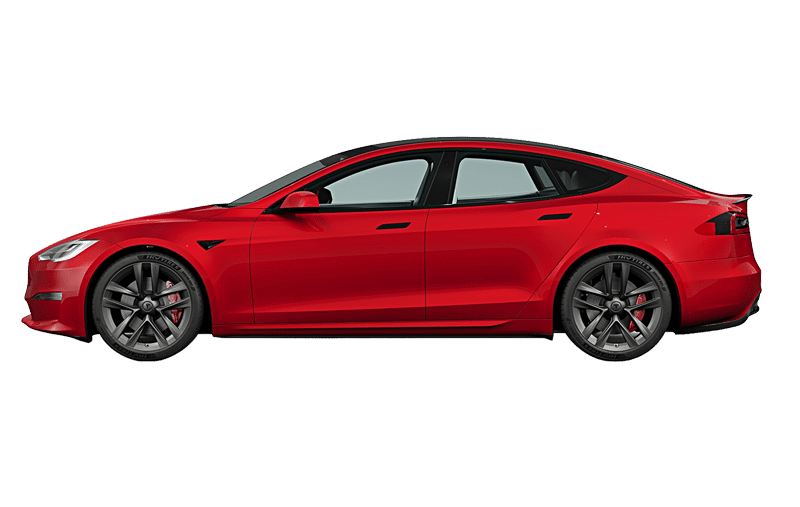
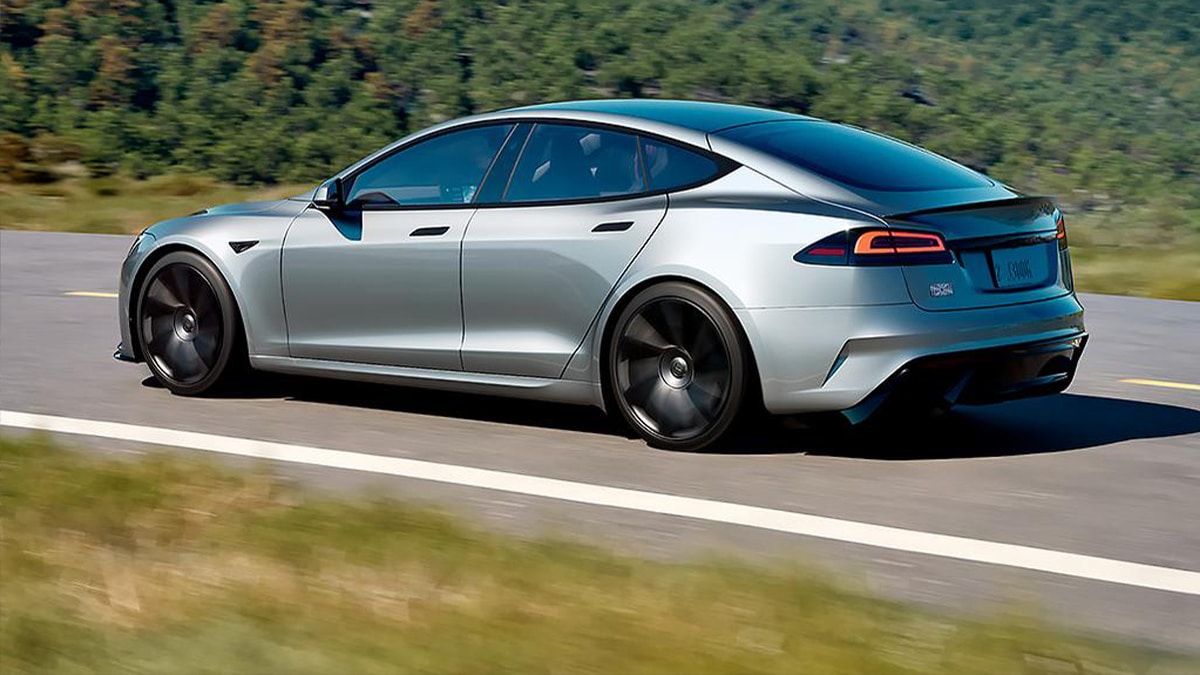
The exterior kept the familiar proportions of the Model S, but the body received slightly wider fenders, revised bumpers, a new diffuser, and adjusted wheel arches. Pop-out door handles, a sloping roofline, and a large tailgate remained characteristic features. The update looks fairly restrained, but behind it was serious technical work on aerodynamics and cooling for the more powerful powertrain.

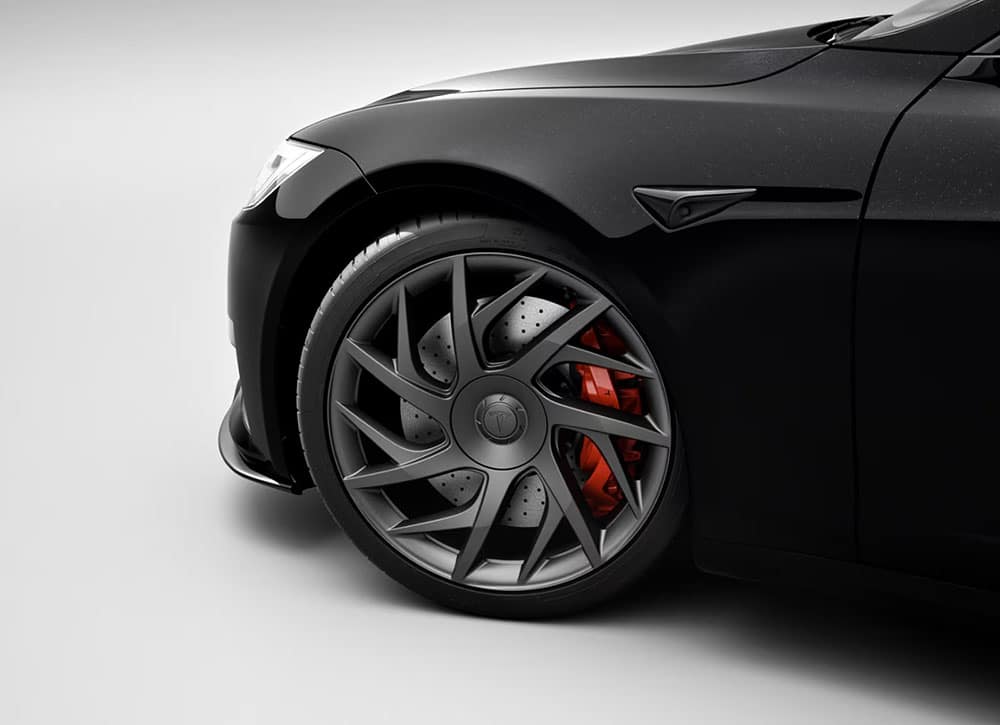
Palladium occupies an intermediate position between an executive electric car and a practical grand tourer. The suspension with adaptive air elements allows the ground clearance to be changed and adjusts damping to the road. The standard 19-inch wheels are better suited to this role, as they provide a softer ride and longer range. Optional 21-inch wheels make the appearance more expressive, but worsen comfort, increase tire costs, and reduce mileage without charging.

Tesla Model S — section image

Interior and technology

The most noticeable change in the cabin is the move from a vertical central display to a horizontal 17-inch screen with a resolution of 2200 by 1300 pixels. A separate digital instrument cluster remained in front of the driver, and second-row passengers received their own screen. It can display multimedia functions and some climate settings. Most physical controls disappeared. The driving direction was offered to be selected through the screen, while turn signals and other functions were moved to touch buttons on the steering wheel. Early Palladium cars were equipped with a Yoke steering wheel without the upper part of the rim. It opens up the view of the instrument panel well, but its unusual shape makes hand-over-hand steering more difficult during parking, U-turns, or quick trajectory corrections.

In terms of practicality, the Model S remains closer to a liftback than to a conventional sedan. The large rear hatch makes it easier to load bulky items. According to Tesla, the compartment behind the second row holds about 709 liters, while the front trunk adds another 89 liters. The low seating position and sloping roof may limit headroom for tall rear passengers, although legroom is sufficient for long trips.

Tesla Model S — section image

Charging and range

The Model S Long Range with 19-inch wheels received a certified EPA range of 405 miles, which is approximately 652 km. For the Model S electric car, this was one of the best results on the American market. The Plaid with 21-inch wheels had a rating of 348 miles EPA, approximately 560 km. The difference is created not only by the additional motor and performance settings, but also by the larger wheels with wider tires.

Tesla did not disclose the official usable battery capacity. Independent measurements indicate approximately 95 or 97 kWh of available energy, so this value should be treated as an estimate. For a used-car buyer, the actual battery condition, fast-charging history, and the difference between the calculated and real range of a specific vehicle are more important.

Maximum DC charging power reaches 250 kW when the state of charge is low and the battery is preconditioned. The car automatically warms the battery when the driver builds a route to a Supercharger. The peak 250 kW is not maintained throughout the entire session. Independent measurements of the Plaid showed an average of around 137 kW between 20 and 80%, so when planning a route it is more important to consider the full charging curve, not only the maximum number.

American cars are equipped with Tesla’s proprietary connector, which later became known as NACS. When using such a Model S in Ukraine, it is necessary to check in advance compatibility with local stations, the availability of suitable adapters, and the capabilities of the specific charging module. American and European versions are not interchangeable by port type.

Tesla Model S — section image

Performance and handling

Long Range uses two electric motors and all-wheel drive. Tesla claimed 670 hp and acceleration to 60 mph in about 3.1 seconds. In a Consumer Reports test, the car achieved 3.2 seconds. For everyday use, this version has more than enough performance, while its lower weight and calmer settings make it a more logical choice for long-distance routes.

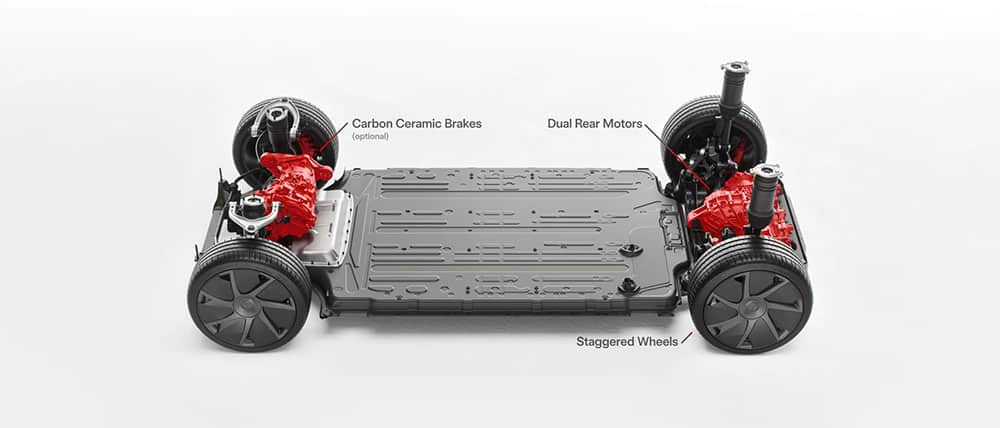
Plaid has three motors: one at the front and two at the rear, allowing traction to be distributed more precisely between the rear wheels. The claimed output is 1020 hp. The 0–60 mph result of 1.99 seconds was achieved with the first foot of rollout subtracted and after powertrain preparation. Without explaining this method, the number creates a misleading impression of a normal road launch.

The claimed top speed of the Plaid was 200 mph, approximately 322 km/h, but it required the appropriate wheels, tires, and braking equipment. Early production cars should not automatically be considered ready for such a mode. On an ordinary road, much more important are the precision of traction control, stability during overtaking, and the ability of the air suspension to control the heavy body.

Pros of the Tesla Model S Palladium

  • 1. Long range in the Long Range version. The 405-mile EPA rating with 19-inch wheels allows fewer stops on long routes.
  • 2. Exceptional Plaid performance. Three motors provide acceleration that even today remains unusual for a large five-seat car.
  • 3. Practical liftback body. The large tailgate and folding second row make it easier to carry bulky items.
  • 4. Two luggage compartments. The rear cargo area is complemented by a front trunk of about 89 liters.
  • 5. Powerful fast charging. A peak of up to 250 kW shortens charging stops if the battery is preconditioned and has a low state of charge.
  • 6. Adjustable air suspension. It changes the body height and helps combine comfort with control over the significant weight.

Cons of the Tesla Model S Palladium

  • 1. Inconvenient Yoke steering wheel. The absence of the upper part of the rim makes hand-over-hand steering more difficult during maneuvers with a large steering angle.
  • 2. Excessive dependence on touch controls. Some familiar operations require pressing buttons on the steering wheel or interacting with the screen.
  • 3. Noticeable losses with 21-inch wheels. They reduce range, worsen ride smoothness, and increase tire costs.
  • 4. Peak charging power drops quickly. The 250 kW figure does not reflect the average speed throughout a full charging session.
  • 5. The American charging port requires attention in Ukraine. Before purchase, adapters, station compatibility, and the car’s charging equipment capabilities should be checked.
  • 6. Difficult identification of 2021 cars. Older Raven and newer Palladium cars can appear on the market at the same time, so the year in an ad alone is not enough.

The Tesla Model S Palladium is suitable for a driver who needs long range, a spacious trunk, all-wheel drive, and strong performance without switching to a crossover. Before buying, it is worth checking the charging port type, battery condition, wheel diameter, repair history, and actual configuration. Buyers who value traditional buttons, a conventional steering wheel, and simple maintenance may find this car too experimental. Long Range is the more rational version for daily and long-distance trips. It offers greater range and already has more power than ordinary roads require. Plaid is aimed at those who knowingly pay for the tri-motor system and extreme acceleration. For both versions, 19-inch wheels better match the role of a fast touring car, while 21-inch wheels put appearance and chassis response above comfort and efficiency.

electrocar.top

Contact us

If you have any suggestions for improving electrocar.top, email us or message us on Telegram.