




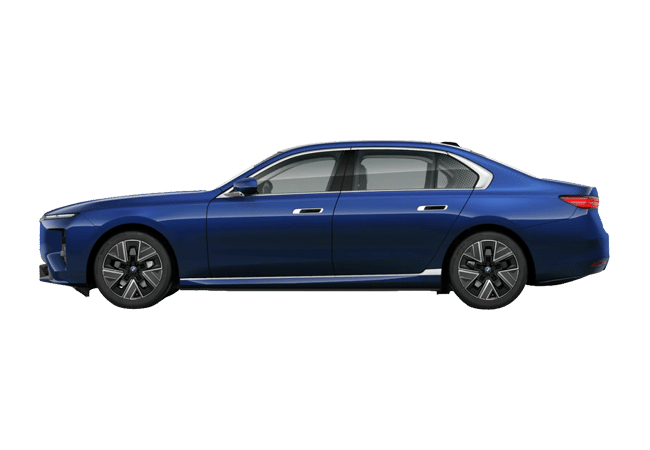
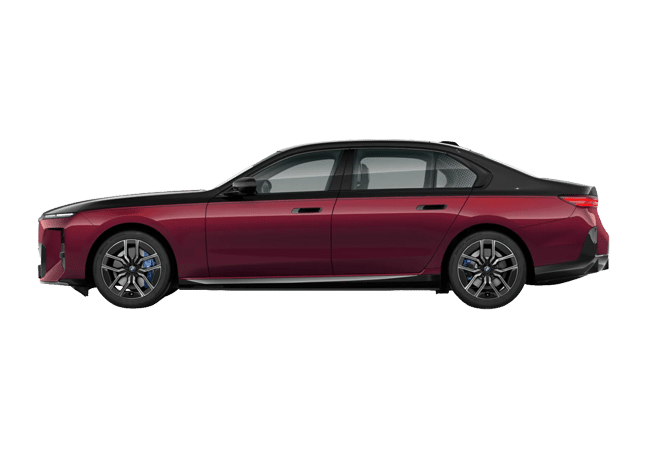
BMW i7 G70 LCI

BMW i7 G70 LCI is an electric car with a WLTP range of up to 727 km, ready to compare across key specifications before buying.

Model years: 2026 - present

BMW i7 G70 LCI

BMW i7 G70 LCI is an electric car with a WLTP range of up to 727 km, ready to compare across key specifications before buying.

Power
455 hp
WLTP range
727 km
EPA range
563 km
Drive
AWD
Battery type
NMC
0-100 acceleration
5.5 s

* specifications are for the base version of the vehicle. Other configurations are available in the trims section.
Specifications

Full specifications

Technical data is grouped into tabs for quick switching between range, battery and dimensions.

Motor, range and performance

Range, real-world consumption, motors, power and acceleration figures for the BMW i7 G70 LCI.

GroupSpecificationValue
RangeWLTP range727 km
EPA range563 km
Real-world range, combined mild≈635 km, estimate
Real-world range, combined cold≈475 km, estimate
ConsumptionOfficial consumption≈20.8 kWh/100 km
Real-world consumption, combined mild≈18.4 kWh/100 km
Real-world consumption, combined cold≈24.6 kWh/100 km
MotorsNumber of motors2
FrontEESM
RearEESM
PlatformBMW CLAR
PowerPower455 hp
Overboost / Launch ControlYes
Torque660 N·m
Performance0-100 km/h5.5 s
0-60 mph5.3 s
Top speed210 km/h

Video

Video Reviews

Reviews, tests and YouTube videos about BMW i7 G70 LCI.

BMW i7 G70 LCI in detail

The facelifted BMW i7 G70 LCI is the updated version of the electric 7 Series, with production starting in July 2026. The facelift changed more than just the exterior and cabin displays: the electric sedan received a sixth-generation BMW eDrive battery, faster charging, a new electronic architecture, and a completely redesigned display system. The European lineup consists of three all-wheel-drive versions: the i7 50 xDrive, i7 60 xDrive, and i7 M70 xDrive. The rear-wheel-drive eDrive50 from the pre-facelift range is no longer the entry-level version. Even the base i7 now has two motors, while the maximum claimed range exceeds 700 km WLTP.

BMW i7 G70 LCI — section image

BMW i7 G70 LCI design changes

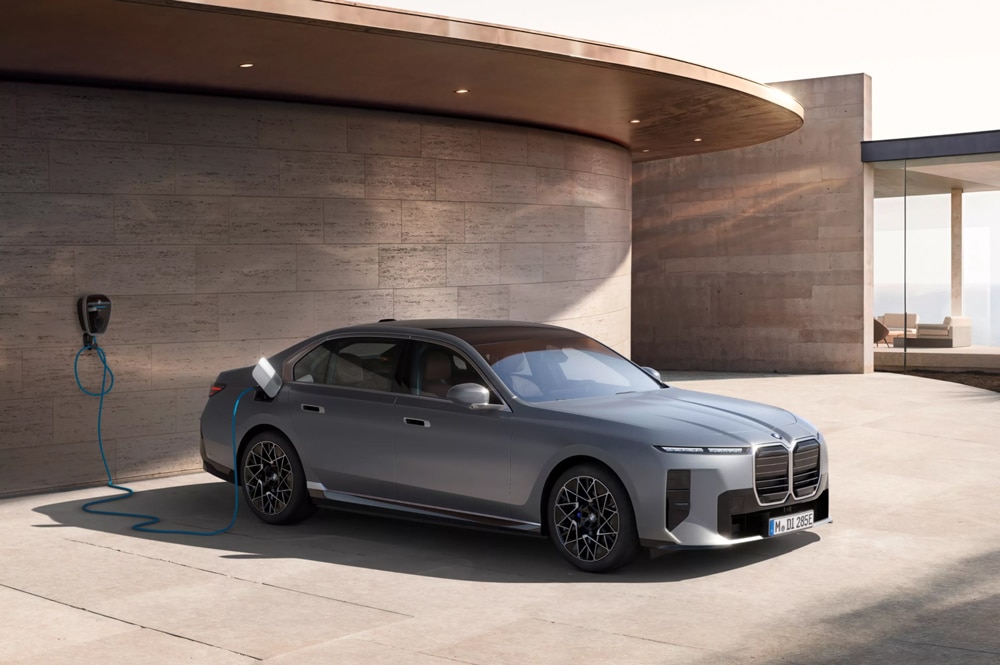
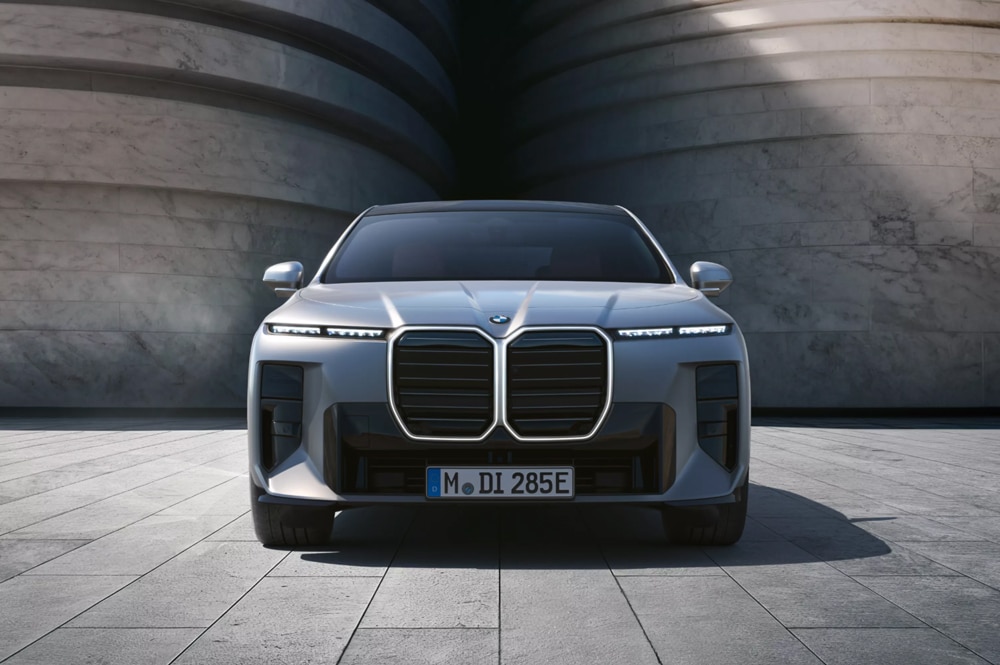
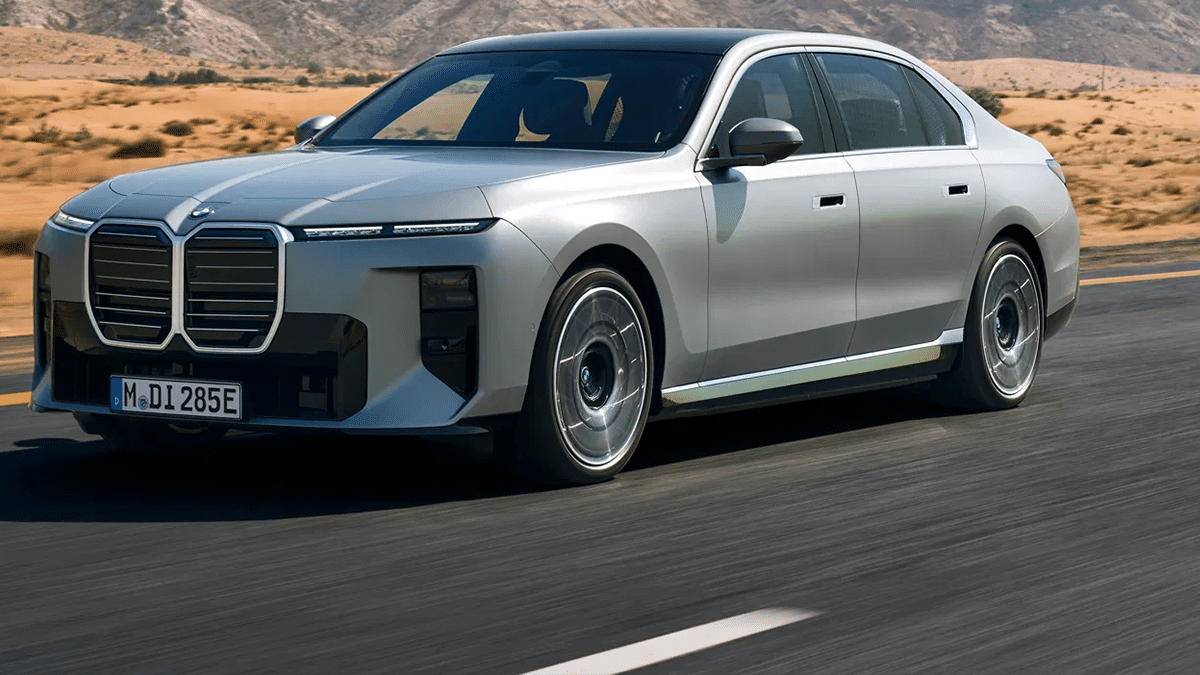
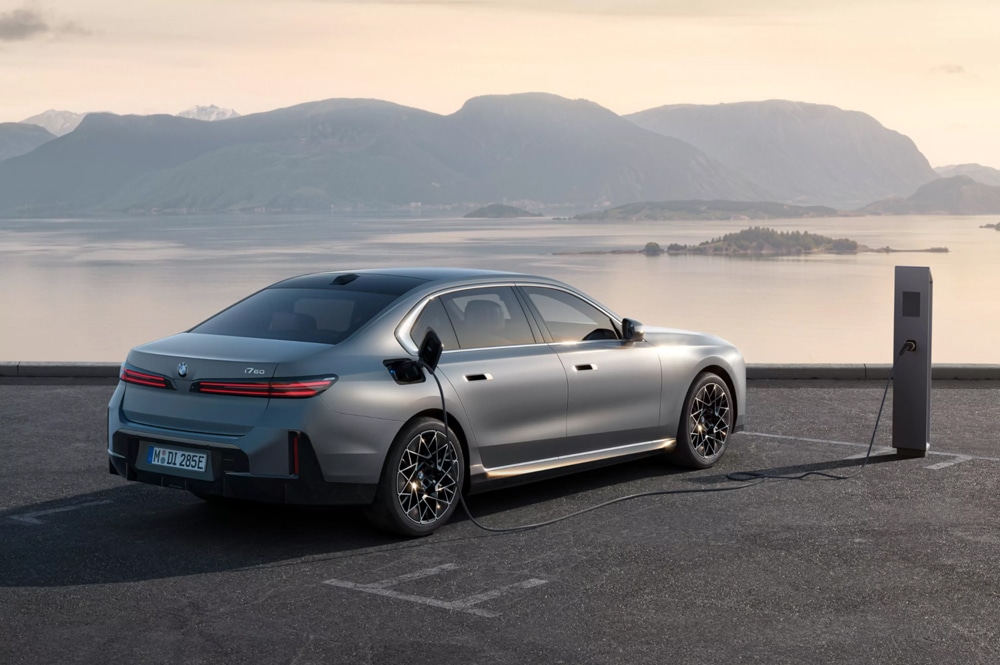
The LCI retains the G70 body and 3215 mm wheelbase but receives redesigned front and rear sections. The large BMW Iconic Glow kidney grille is complemented by significantly smaller crystal headlights, a new bumper, and cleaner body surfaces. At the rear, there are new taillights and a redesigned bumper. BMW describes this as a new design language for its luxury models, although the main proportions of the pre-facelift i7 remain recognizable.

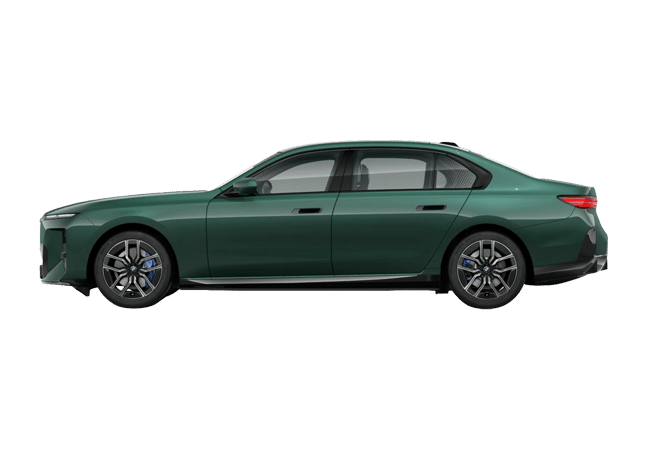
The electric car retains a length of almost 5.4 meters and its focus on second-row passengers. For city use, such dimensions require a spacious parking garage or parking space. Integral Active Steering helps during maneuvers by turning the rear wheels in the opposite or the same direction as the front wheels, depending on speed.

Updated wheels from 20 to 22 inches are available for the LCI version. Large wheels suit the substantial body, but they reduce ride comfort, increase tire costs, and shorten range. The best WLTP figures apply to efficient configurations, not every car available in the configurator.

The shared architecture with petrol and plug-in hybrid versions once again leaves no room for a front trunk. Charging cables are stored in the main luggage compartment. This is not a critical drawback for an executive car, but some rivals built on dedicated electric platforms use the front section more practically.

BMW i7 G70 LCI — section image

Interior and technology

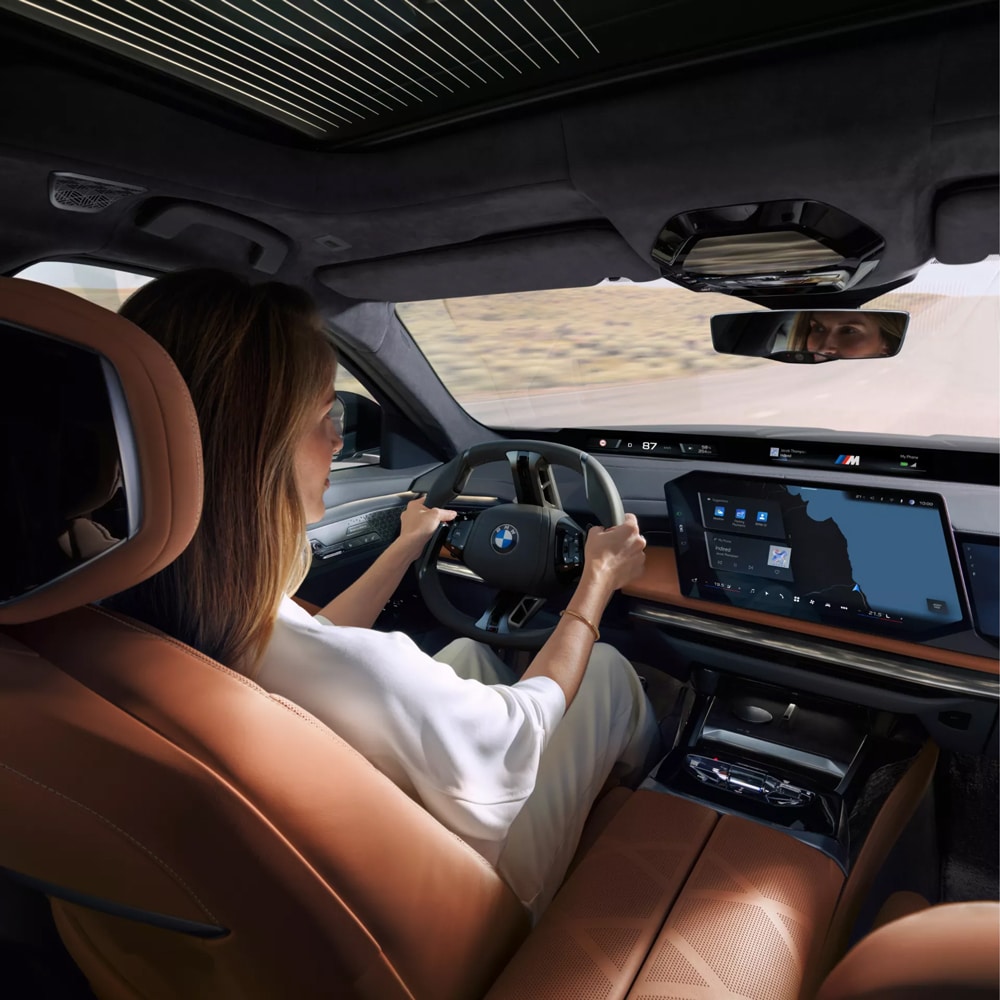
The main change in front of the driver is the transition to BMW Panoramic iDrive. The Panoramic Vision projection strip is positioned along the lower edge of the windshield and displays speed, navigation, and customizable widgets. A separate central display handles multimedia, climate control, and vehicle settings. The front passenger receives a dedicated BMW Passenger Screen.

The system runs on BMW Operating System X. It supports a voice assistant, apps, personal profiles, and remote updates. A large number of functions are concentrated in the digital interface, so the owner will need to get used to the new logic. There are few physical buttons for climate control and some everyday operations.

The second row remains the main reason to choose the i7 instead of the smaller i5. The Executive Lounge package adds a greater recline angle for the right rear seat, a footrest, ventilation, and massage. Equipment depends on the specification, so expensive features should be checked by VIN rather than assumed from an exterior M package.

The updated BMW Theatre Screen has a 31.3-inch diagonal and 8K resolution. It supports streaming video, apps, games, and video calls. A separate camera is used for calls. The screen and Bowers & Wilkins audio system with Dolby Atmos remain optional, while the availability of specific services depends on the country and subscription. BMW plans to add a digital interior rear-view mirror from the start of production in November 2026. Cars built from July to October may not have it. The manufacturer says retrofitting may be possible later, but the terms should be checked separately for each region.

BMW i7 G70 LCI — section image

Charging and driving range

The new battery uses cylindrical BMW eDrive Gen6 cells. Their volumetric energy density is approximately 20% higher than that of the prismatic cells used in the previous i7. Usable capacity has increased from 101.7 to 112.5 kWh, although the external dimensions of the battery housing remain almost unchanged. The i7 50 xDrive offers up to 708 km WLTP, while the i7 60 xDrive reaches up to 707 km. The M70 xDrive is rated at up to 650 km WLTP. At the start of production, some of these European figures still have preliminary status. The final result for a specific configuration depends on wheels, tires, and optional equipment.

The increase in range comes not only from the larger battery. SiC inverters, optimized wheel bearings, more efficient tires, and a new thermal system have improved overall efficiency by approximately 7%. The heat pump uses heat from the motors to warm the cabin and battery, which is particularly important during winter journeys. Maximum DC charging power has increased from 195 to 250 kW. BMW claims approximately 28 minutes to recharge the battery from 10 to 80%. In 10 minutes, the i7 50 xDrive and i7 60 xDrive can add up to 205 km of estimated range, while the M70 adds up to 185 km. These results require a preconditioned battery, a low initial state of charge, and a sufficiently powerful charging station.

Three-phase AC charging at 22 kW is standard. A full charging cycle takes approximately 6 hours. An 11 kW source requires around 12 hours. Owners in Ukraine should check the available electrical capacity of their house or parking facility in advance, because the presence of a 22 kW charging station does not guarantee a matching power supply. The European i7 uses a CCS2 port. The route planner takes charging stops, tariffs, occupancy, and available connectors into account. The battery is preconditioned automatically when the station is selected through BMW Maps. Preheating can also be started manually through the central display or the My BMW app.

BMW i7 G70 LCI — section image

Performance and handling

  • The i7 50 xDrive has two motors, 455 hp, and 660 Nm. Acceleration to 100 km/h takes 5.5 seconds, and top speed is 210 km/h. This is the entry-level version, but it has enough power for fast travel with a full cabin. All-wheel drive makes it easier to deliver traction on wet and snowy roads.
  • The i7 60 xDrive produces 544 hp and 745 Nm. The sedan accelerates to 100 km/h in 4.8 seconds, while top speed is limited to 240 km/h. Its range is almost identical to that of the i7 50 xDrive, so the extra cost makes sense for drivers who want stronger acceleration without moving up to the M70.
  • The i7 M70 xDrive produces 680 hp, which is 20 hp more than the pre-facelift model. In Sport mode, 1015 Nm is available, while Sport Boost or Launch Control increase torque to 1100 Nm. Standard acceleration to 100 km/h takes 3.8 seconds. The 3.5-second figure also quoted by BMW is achieved with the first foot of rollout subtracted. Top speed is 250 km/h.

Air suspension with electronically controlled dampers maintains the body height and isolates passengers from long road undulations. Executive Drive Pro actively counteracts body roll, while rear-wheel steering improves maneuverability. The sophisticated chassis controls the car well, but the substantial weight does not disappear. It affects braking, tire wear, and behavior during sudden changes of direction.

Pros of the BMW i7 G70 LCI

  • 1. More than 700 km of WLTP range. The i7 50 xDrive and i7 60 xDrive allow long journeys with fewer charging stops.
  • 2. 112.5 kWh Gen6 battery. New cylindrical cells provide more usable energy in a housing that is almost the same size as before.
  • 3. Faster DC charging. Power of up to 250 kW reduces the claimed 10-to-80% charging time to approximately 28 minutes.
  • 4. Standard 22 kW AC charger. With a suitable three-phase connection, a full charge takes about 6 hours.
  • 5. All-wheel drive in every version. Two motors provide stable traction on wet surfaces and winter roads.
  • 6. New digital cabin. Panoramic iDrive, Passenger Screen, and Operating System X expand the possibilities for the driver and front passenger.
  • 7. Second-row comfort. Executive Lounge and Theatre Screen allow the car to be configured for chauffeur-driven use and long-distance travel.

Cons of the BMW i7 G70 LCI

  • 1. Significant weight. The large battery, two motors, and complex chassis increase the load on the tires, brakes, and suspension.
  • 2. Inconvenient city dimensions. A body almost 5.4 meters long requires a spacious parking area and careful maneuvering.
  • 3. No front trunk. Charging cables take up part of the main luggage compartment.
  • 4. Heavy dependence on displays. Climate control and many everyday functions are managed through the digital interface.
  • 5. The best features remain optional. Theatre Screen, Executive Lounge, Bowers & Wilkins, and some active chassis systems are not fitted to every car.
  • 6. Large wheels reduce efficiency. 21- or 22-inch wheels shorten range, worsen comfort, and increase tire costs.
  • 7. Some specifications are still preliminary. Final certified figures may change after the European approval process is completed.

The BMW i7 G70 LCI is suitable for buyers who need an electric executive sedan with long range, a comfortable second row, and strong long-distance equipment. Compared with the pre-LCI model, the new version charges faster, travels farther, and offers a more modern digital system. The i7 50 xDrive is the rational choice for passenger transport and everyday driving. The i7 60 xDrive offers almost the same range with noticeably stronger performance. The M70 xDrive is aimed at owners who want 680 hp, an active chassis, and M equipment. Its advantages come with higher energy consumption, more expensive tires, and shorter range.

electrocar.top

Contact us

If you have any suggestions for improving electrocar.top, email us or message us on Telegram.